
 By
By 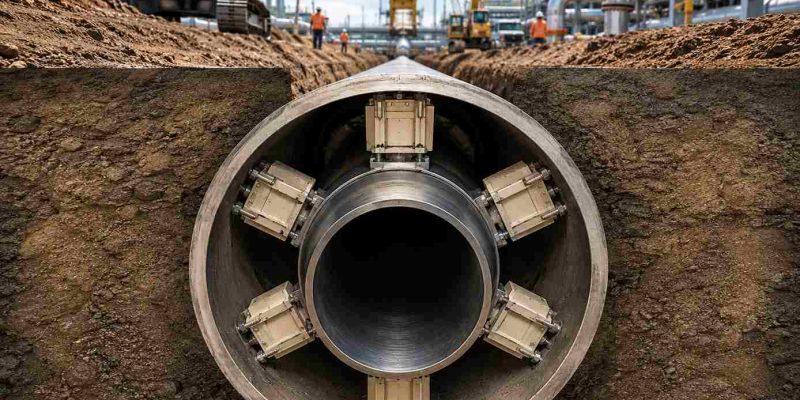
Oil and gas pipelines play a critical role in transporting energy resources safely and efficiently across long distances. To ensure reliable pipeline performance, every installation component – including pipe spacers – must provide strength, protection, and stability. One of the key components used in pipeline projects is the pipe spacer.
Pipeline projects require spacer systems with varying designs, materials, and load capacities. Pipe spacers reduce friction, prevent coating damage, and ensure proper alignment inside casing pipes.
In this blog, we will discuss which pipe spacers are best for Oil and Gas Pipelines, along with their types, benefits, and important factors to consider before choosing them.
Role of Pipe Spacers in Oil and Gas Pipelines
Pipe spacers are mechanical supports installed around carrier pipes to keep them centered inside casing pipes. They create a safe gap between the pipe and casing surface, helping reduce direct contact and external stress.
In pipeline projects, these spacers are commonly used in:
- Underground pipeline crossings
- Horizontal directional drilling applications
- Road and railway crossings
- Offshore and onshore installations
- Utility and industrial pipeline systems
Without proper spacing systems, pipelines may suffer from coating damage, corrosion risks, and uneven load distribution.
Why Proper Pipe Spacer Selection Is Important
Selecting the correct spacer is not only about pipe support. It directly affects the long-term performance of the entire pipeline system.
The right spacer helps:
- Protect pipeline coating during installation
- Improve load distribution
- Reduce vibration and mechanical stress
- Support smooth insertion into casing pipes
- Increase operational reliability
- Minimize maintenance requirements
For demanding Oil and Gas Pipelines, spacer quality becomes even more important because these systems operate under high pressure and harsh environmental conditions.
Types of Pipe Spacers Used in Pipeline Projects
Different pipeline environments require different spacer designs. Below are some of the most commonly used options.
Steel Pipe Spacers
Steel spacers are widely used in heavy-duty applications because of their strength and durability. They are suitable for large-diameter pipelines and high-load conditions.
These spacers are commonly preferred in industrial installations where additional structural support is required.
Advantages
- High load-bearing capacity
- Strong mechanical performance
- Suitable for long pipeline sections
- Excellent durability
Best Applications
- Large transmission lines
- Heavy industrial installations
- Long-distance pipeline crossings
HDPE Pipe Spacers
HDPE spacers are lightweight and corrosion-resistant. They are ideal for environments where moisture, chemicals, or soil conditions may affect metal components.
These spacers are becoming increasingly popular in modern Oil and Gas Pipelines due to their low maintenance and smooth installation performance.
Advantages
- Corrosion resistance
- Lightweight structure
- Easy installation
- Reduced friction during pipe pulling
Best Applications
- Underground installations
- Coastal pipeline systems
- Corrosive environments
Roller Type Pipe Spacers
Roller spacers are designed with rolling components that help reduce drag while inserting pipes into casing systems. They are highly useful for long-distance installations and directional drilling projects.
Advantages
- Smooth pipe movement
- Reduced installation force
- Lower coating damage risk
- Improved alignment accuracy
Best Applications
- Horizontal directional drilling
- Long casing pipe installations
- High-friction environments
Adjustable Pipe Spacers
Adjustable spacers are flexible systems that can fit different pipe sizes and project requirements. These are useful when installation conditions vary.
Advantages
- Flexible sizing
- Easy customization
- Better adaptability for field conditions
Best Applications
- Customized pipeline projects
- Multi-size installations
- Temporary or changing configurations
Comparison of Pipe Spacer Types for Oil and Gas Pipelines
| Spacer Type | Key Feature | Best Application | Main Advantage |
| Steel Pipe Spacers | High structural strength | Heavy-duty and large-diameter pipelines | Excellent load-bearing capacity |
| HDPE Pipe Spacers | Corrosion resistance and lightweight design | Underground and coastal installations | Easy installation and long service life |
| Roller Type Pipe Spacers | Rolling mechanism reduces friction | Horizontal directional drilling (HDD) and long crossings | Smooth pipe movement with minimal resistance |
| Adjustable Pipe Spacers | Flexible sizing and adaptability | Custom or variable-diameter projects | High installation flexibility |
Features of the Best Pipe Spacers for Oil and Gas Pipelines
Not all spacers are designed equally. High-quality pipeline spacers should include several important features to ensure long-term performance.
Strong Material Construction
The material should withstand pressure, soil movement, temperature changes, and environmental exposure. Stainless steel, carbon steel, and HDPE are among the most reliable materials.
Corrosion Resistance
Pipelines often operate in challenging conditions where moisture and chemicals are present. Corrosion-resistant spacers help increase service life and reduce maintenance costs.
Proper Load Distribution
A good spacer evenly distributes the weight of the pipeline to prevent stress concentration and pipe deformation.
Low Friction Surface
Smooth surfaces help reduce resistance during installation, especially in casing applications where pipes are pushed or pulled over long distances.
Secure Fastening System
Reliable fastening mechanisms prevent movement and maintain alignment throughout operation.
Factors to Consider Before Selecting Pipe Spacers
Choosing the best spacer depends on multiple technical and environmental factors. Every pipeline project has unique requirements, so careful evaluation is necessary.
Pipeline Diameter
Spacer dimensions must match the carrier pipe and casing pipe sizes accurately to ensure proper alignment.
Environmental Conditions
Weather, soil, water, heat, and chemicals around the pipeline help decide which spacer material is best.
Installation Method
Different pipeline installation methods need different types of spacers. For example, roller spacers help pipes move easily during installation.
Load Requirements
Heavier pipelines require stronger spacers with higher load-bearing capacity.
Maintenance Expectations
Low-maintenance spacers are preferred in remote or difficult-to-access pipeline systems.
Benefits of High-Quality Pipe Spacers
Using reliable spacer systems offers long-term operational advantages for pipeline infrastructure projects.
Improved Pipeline Safety
Properly installed pipe spacers reduce direct contact between the carrier and casing pipe, minimizing stress, coating damage, and alignment issues during installation and operation.
Longer Service Life
Corrosion-resistant and durable spacer materials help extend the overall lifespan of the pipeline system by protecting it from environmental and mechanical damage.
Faster Installation
Well-designed spacers reduce friction and resistance during pipe insertion, allowing smoother and quicker installation, especially in long-distance or directional drilling projects.
Lower Operational Costs
By reducing maintenance needs, repair frequency, and installation complications, high-quality spacers help lower the overall lifecycle cost of the pipeline system.
Better Structural Stability
Spacers maintain consistent pipe positioning inside the casing, ensuring balanced load distribution and preventing deformation or sagging.
Reduced Pipeline Damage
They prevent coating abrasion and surface damage that can occur due to direct pipe-to-casing contact during movement or vibration.
Improved Alignment Accuracy
Proper spacing ensures that the carrier pipe remains centered, reducing the risk of misalignment and uneven stress distribution.
Corrosion Protection
By maintaining a uniform gap, spacers help prevent moisture accumulation and direct metal-to-metal contact, reducing corrosion risk.
Smooth Pipeline Installation
Low-friction spacer surfaces allow easier pipe pulling or pushing, especially in HDD and long casing applications.
Increased System Reliability
Overall pipeline performance improves due to stable positioning, reduced mechanical stress, and better long-term operational behavior.
Common Challenges Solved by Pipe Spacers
Modern pipeline projects face several technical challenges during installation and operation. Pipe spacers help address many of these issues effectively.
Coating Damage Prevention
Direct contact between carrier and casing pipes may damage protective coatings. Spacers maintain a safe separation gap.
Friction Reduction
During installation, excessive friction can create pulling difficulties. Roller and HDPE spacers help minimize resistance.
Alignment Issues
Improper alignment can lead to uneven pressure and operational instability. Spacers keep pipelines centered.
Vibration Control
Pipeline movement and vibration can affect long-term durability. Properly designed spacers help stabilize the system.
Future Trends in Pipeline Spacer Technology
As pipeline infrastructure becomes more advanced, spacer technology is also evolving. Manufacturers are developing lightweight, durable, and high-performance spacer systems for demanding applications.
Some emerging trends include:
- Advanced Polymer and Composite Materials
- Low-Friction Engineering Designs
- Modular and Customizable Spacer Systems
- Enhanced Corrosion and Wear Resistance
- Sustainability-Focused Manufacturing Processes
These innovations are helping improve installation efficiency and long-term pipeline reliability.
Conclusion
Choosing the right pipe spacers for Oil and Gas Pipelines helps keep pipelines safe, stable, and easy to install. They protect the pipeline from damage and help maintain proper alignment inside the casing pipe.
Steel spacers are best for strong and heavy-duty use, while HDPE spacers are lightweight and resist rust and corrosion. Roller spacers help pipelines move smoothly during installation.
Before choosing pipe spacers, it is important to check the pipe size, installation method, and working environment. Selecting the right pipe spacer ensures safe installation, improved efficiency, and long-term reliability of oil and gas pipeline systems.










Comments