
 By
By 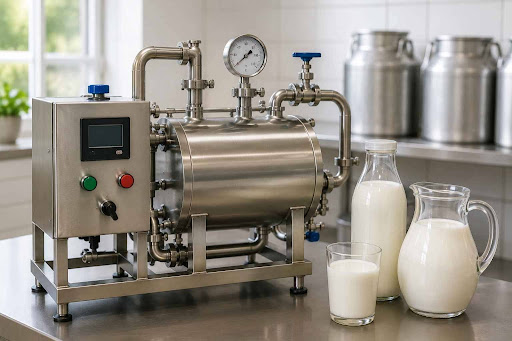
A friend of mine runs a small beverage company, and a couple of years back he told me something that stuck with me for a while. He said the day he finally installed a proper UHT sterilizer was the day his business actually stopped feeling fragile. Before that, every single batch felt like a small gamble: would it survive transport, would it hold up sitting on some shelf for three weeks before anyone actually bought it? After that, he just stopped thinking about it. Barely crosses his mind anymore, he told me. That’s honestly what this equipment does for a food business: it quietly takes one massive source of risk and just removes it from the equation entirely.
If you haven’t come across the term before, UHT stands for ultra-high temperature, and a UHT sterilizer does more or less what it sounds like: it heats a liquid food product to a very high temperature for just a few seconds, then cools it back down fast. What comes out the other end is essentially sterile, free of the microorganisms that would normally cause it to spoil, and it doesn’t need refrigeration the way pasteurized products usually do.
Why Shelf Life Matters for Food Quality and Business
Plenty of manufacturers stick with pasteurization simply because it’s familiar, and look, for certain products that’s still the right call; nobody’s arguing otherwise. But for liquid foods that need to travel long distances or sit on a shelf without refrigeration, UHT sterilization pretty much rewrites the whole business model around distribution.
How Longer Shelf Life Expands Storage and Distribution Options
This is probably the biggest reason manufacturers eventually make the switch. A UHT sterilization machine can stretch shelf life out to several months, sometimes almost a full year, without needing a fridge anywhere near it. Compare that to pasteurized milk or juice, which you’re lucky to get two weeks out of sitting in cold storage, and it becomes pretty obvious why this matters so much once distribution enters the picture.
All of a sudden, a small manufacturer isn’t stuck selling within a fifty-mile radius anymore. Products can travel across states, even across countries, without dragging a cold chain along the entire route, and that honestly opens doors that simply weren’t there before.
How Better Preservation Reduces Cold Chain Challenges
Refrigerated distribution is expensive, and honestly, it’s kind of fragile too if you think about it. One cold storage unit breaks down somewhere along the supply chain, and boom, an entire batch is gone before it even reaches a store shelf. Manufacturers running UHT sterilizers mostly sidestep this headache altogether, since the product doesn’t need constant refrigeration to stay safe in the first place.
This becomes even more important for anyone exporting or shipping into remote areas, places where you honestly can’t count on reliable cold storage existing the whole way through.
How Preservation Technology Improves Food Safety
UHT sterilization wipes out essentially all microorganisms in the product, not just the harmful ones that standard pasteurization is aiming for. That gives manufacturers a level of confidence around food safety that’s genuinely tough to match through other methods.
For anyone producing dairy alternatives, plant-based milks, soups, or basically any liquid product meant to sit around for a while, this level of sterility isn’t some nice extra; it’s often the exact thing that makes the product commercially viable to begin with.
How Proper Preservation Helps Retain Nutritional Value
There’s this common assumption that blasting a product with intense heat has to wreck its nutritional value, but UHT sterilization actually gets around this surprisingly well. Because the heat exposure only lasts a few seconds instead of several minutes, most of the vitamins, proteins, and flavour compounds make it through mostly intact.
Manufacturers who’ve worked with companies like Envitro Tech on setting up their UHT sterilizer equipment often mention the end product tastes and holds up noticeably closer to fresh than they expected, especially compared against older, slower heat treatment methods they’d used before.
How Longer Shelf Life Reduces Food Waste and Costs
Every single food manufacturer knows that sinking feeling when a batch spoils before it ever reaches a customer. It’s not just a quality problem, it’s a straight hit to the bottom line, and at scale it adds up faster than most people would guess. A solid UHT sterilization system cuts this risk down substantially, since that extended shelf life just gives products so much more room to breathe before spoilage becomes a concern at all.
This matters even more for manufacturers dealing with seasonal demand swings, or slower retail partners where product might sit in a warehouse way longer than anyone originally planned for.
How Extended Shelf Life Supports Food Exports
Exporting food products brings its own headaches: long transit times, customs delays, storage conditions you honestly can’t predict or control along the way. A product that needs constant refrigeration just doesn’t survive that kind of journey reliably in most situations.
UHT sterilized products handle all of this without much drama at all. That’s a big part of why so many manufacturers eyeing international expansion invest in proper UHT sterilizing machinery early, rather than scrambling to retrofit their process later once export demand actually shows up at their door.
Beyond Milk: Other Foods That Can Benefit from Extended Shelf Life
UHT sterilization used to be almost synonymous with milk, and honestly that’s probably still the most familiar use case for most people. But juices, plant-based beverages, cream, soups, sauces, even certain liquid egg products can all run through UHT equipment depending on how the setup is configured.
Manufacturers looking to branch out their product range often realize a single well-built UHT sterilizer can actually handle several product types at once, which makes the equipment investment go a lot further than buying separate machines for every category.
Key Factors to Consider When Choosing a UHT Sterilizer
Choosing the right UHT sterilizer is about more than just the price. A few important factors can make a big difference:
1. Right Capacity
Choose a system that matches your actual production needs. Too large can increase costs, while too small can create production bottlenecks.
2. Temperature & Time Control
UHT processing requires accurate temperature and holding-time control. Consistency is important for product safety and quality.
3. Easy Cleaning
Look for equipment that supports efficient cleaning and sterilization between production runs. This helps reduce downtime and maintenance effort.
4. After-Sales Support
Good installation support, servicing, spare parts, and technical assistance can prevent long production interruptions.
Final Thoughts
For food manufacturers working with liquid products, a UHT sterilizer isn’t just about stretching shelf life, though honestly, that alone is already a massive win. It’s about opening up distribution you didn’t have before, cutting down on waste nobody wants to deal with, and giving customers a product they can actually trust no matter how far it traveled or how long it sat on some shelf.
As more manufacturers push to expand beyond their local markets and try to break free from fragile cold chains, UHT sterilization technology keeps becoming a bigger part of that conversation. Companies like Envitro Tech continue refining their UHT sterilizing equipment to handle a wider range of products, which means manufacturers of pretty much any size finally have equipment that actually fits where they’re trying to go, instead of holding them back.










Comments